


A space where emerging practices find direction through dialogue, mentorship, and sustained curatorial commitment.
A movement that gathers force as it goes; an object in motion sustained by speed, direction, mass, and continuity.
For many artists, momentum rarely announces itself loudly. It appears quietly, in moments when ideas begin to cohere, when questions sharpen, and when a practice starts to push beyond the limits of its immediate environment. Yet this phase is also where many artists find themselves most unmoored. Outside the structures of institutions or established galleries, guidance is often fragmented, feedback intermittent, and support difficult to access. At Interspace, MOMENTUM was conceived in response to this lacuna—to recognise practices at this threshold and to offer the conditions needed for movement to continue with clarity and confidence.
Interspace positions itself here not as an arbiter of arrival, but as a bridge. Drawing from curatorial knowledge, ecosystem awareness, and sustained engagement, Momentum extends the role traditionally played by galleries—reimagined through flexibility, proximity, and care. Artists are met where they are, through one-on-one mentorship and ongoing dialogue that responds to the specific needs of their practice. This includes support in articulating ideas, shaping portfolios, and maturing bodies of work; often, at a stage when artists, particularly those emerging from college and universities, are still learning to see the full horizon of possibility around them. Momentum exists to make that horizon visible.
Interspace creates pathways that extend beyond what an artist might imagine alone. Practices are positioned within national conversations; artists are introduced to exhibition contexts and gallery set-ups, institutional frameworks, and collector networks that not only align with their direction but present a supporting hand for their trajectory. The aim is not acceleration for its own sake, but sustainable movement—elevating an artist’s career growth grounded in thoughtfulness, readiness, and intent. Momentum holds the moment when practice gathers force, and stands alongside it as it moves forward.
MOMENTUM – WHERE EMERGING PRACTICES FIND CLARITY, CRITICAL DIALOGUE, AND THE SUPPORT TO MOVE FORWARD WITH INTENT
Momentum artists
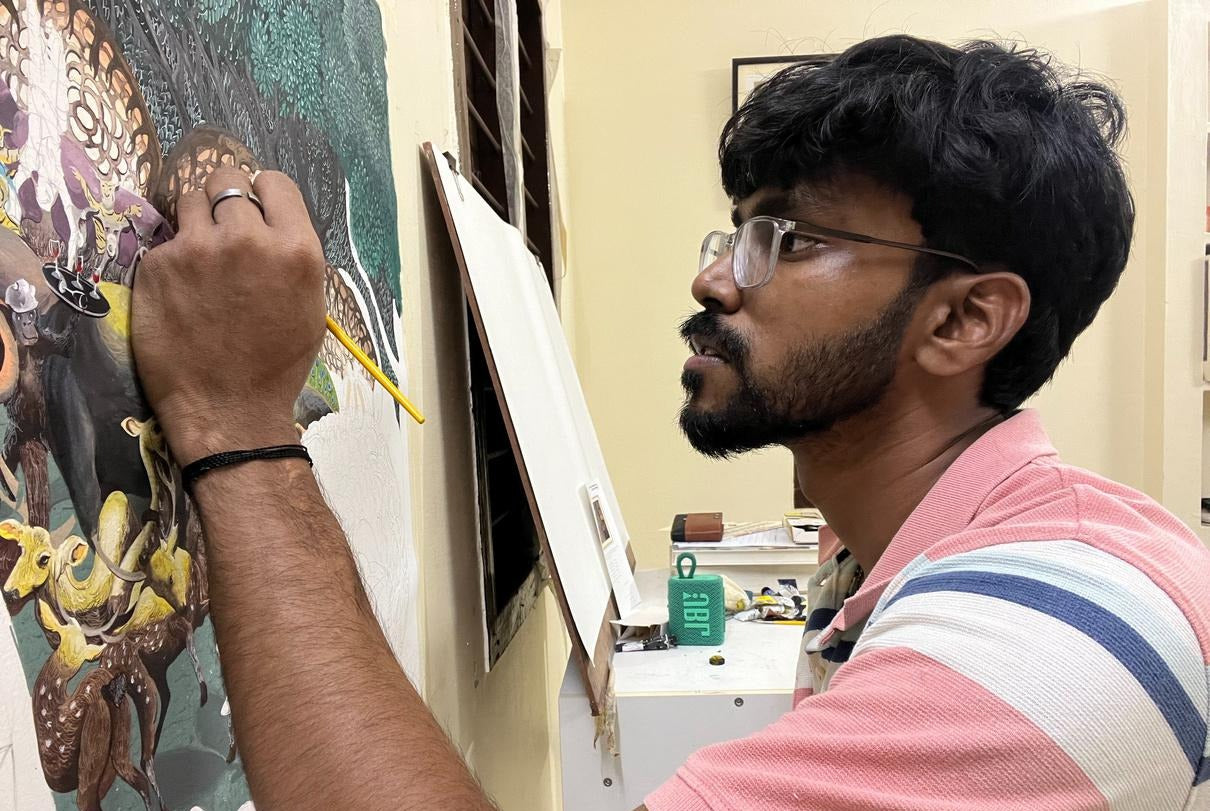
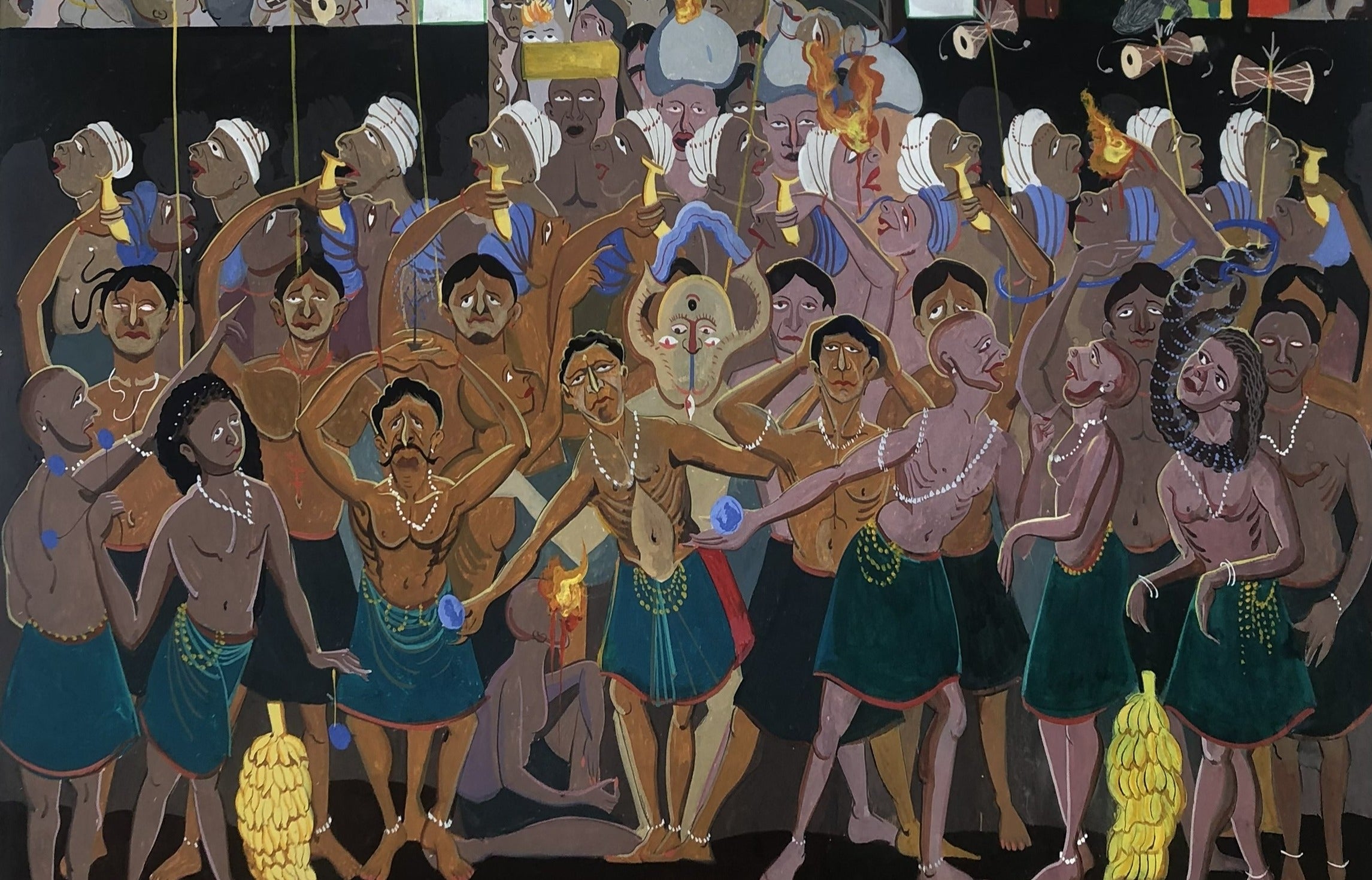
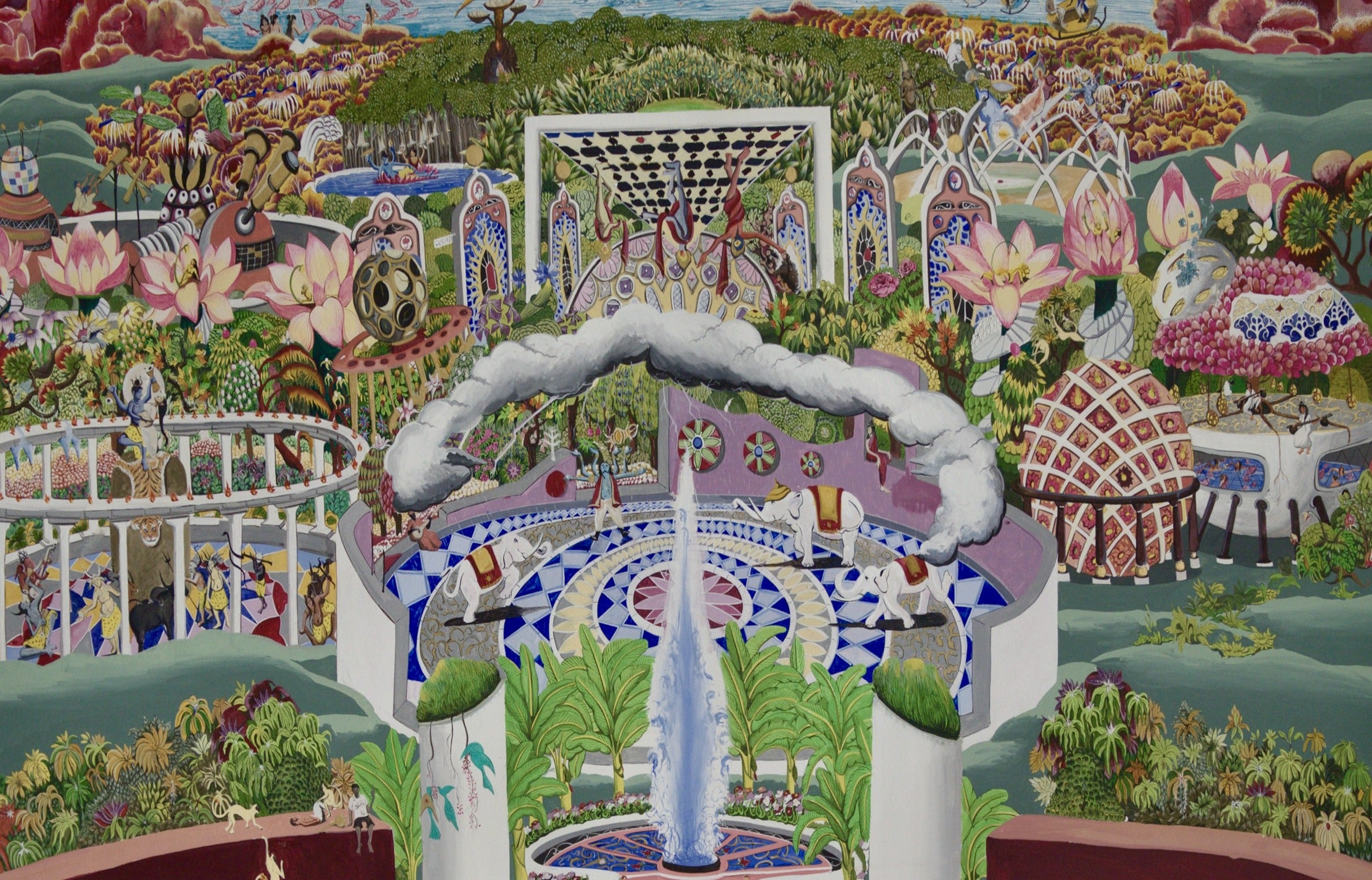
If land and water could testify against us, what grotesque theatre of love, violence, and excess would they stage—and where would we find ourselves within it?
Aman Kumar’s (b. 1999) practice unfolds at the intersection of political critique, dark satire, and the macabre, using painting as a site to confront the violence embedded in systems of power. His works frequently engage with…
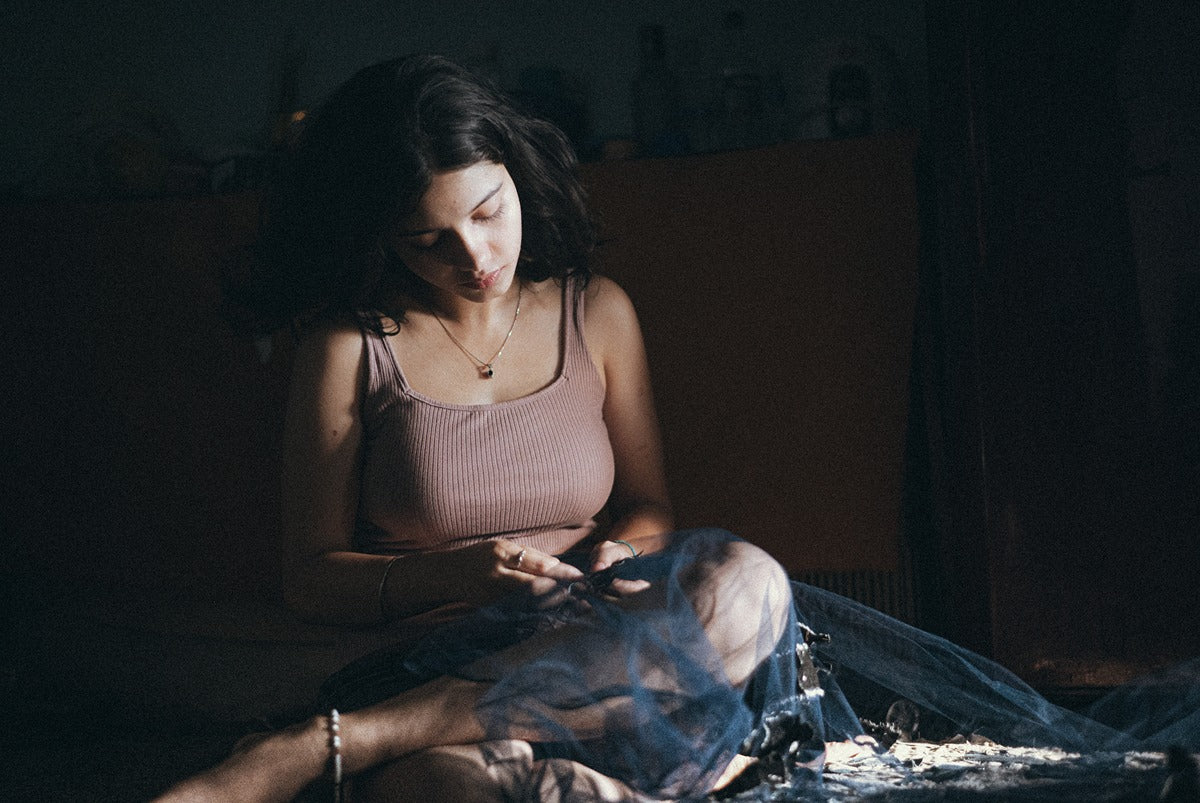
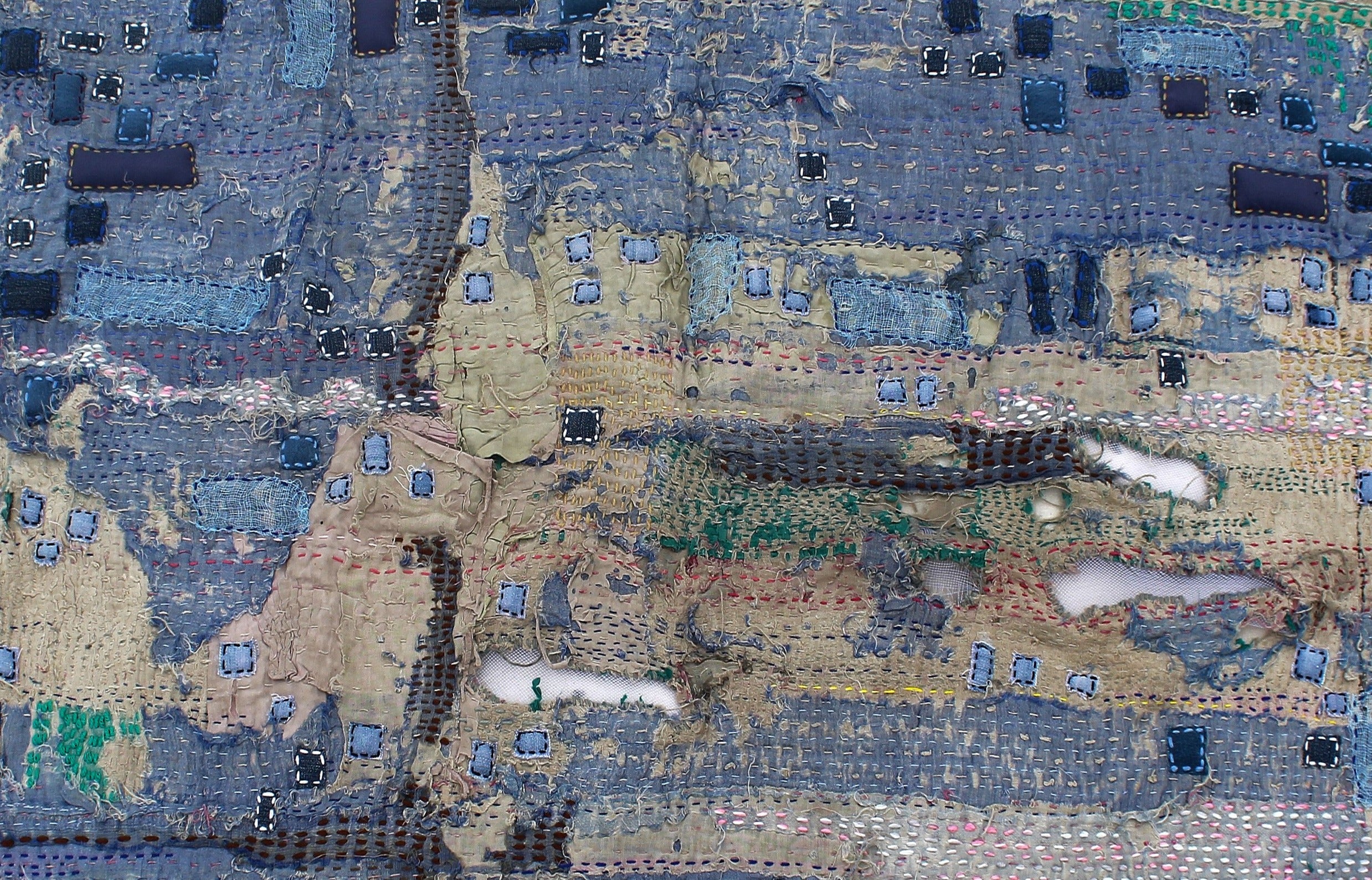
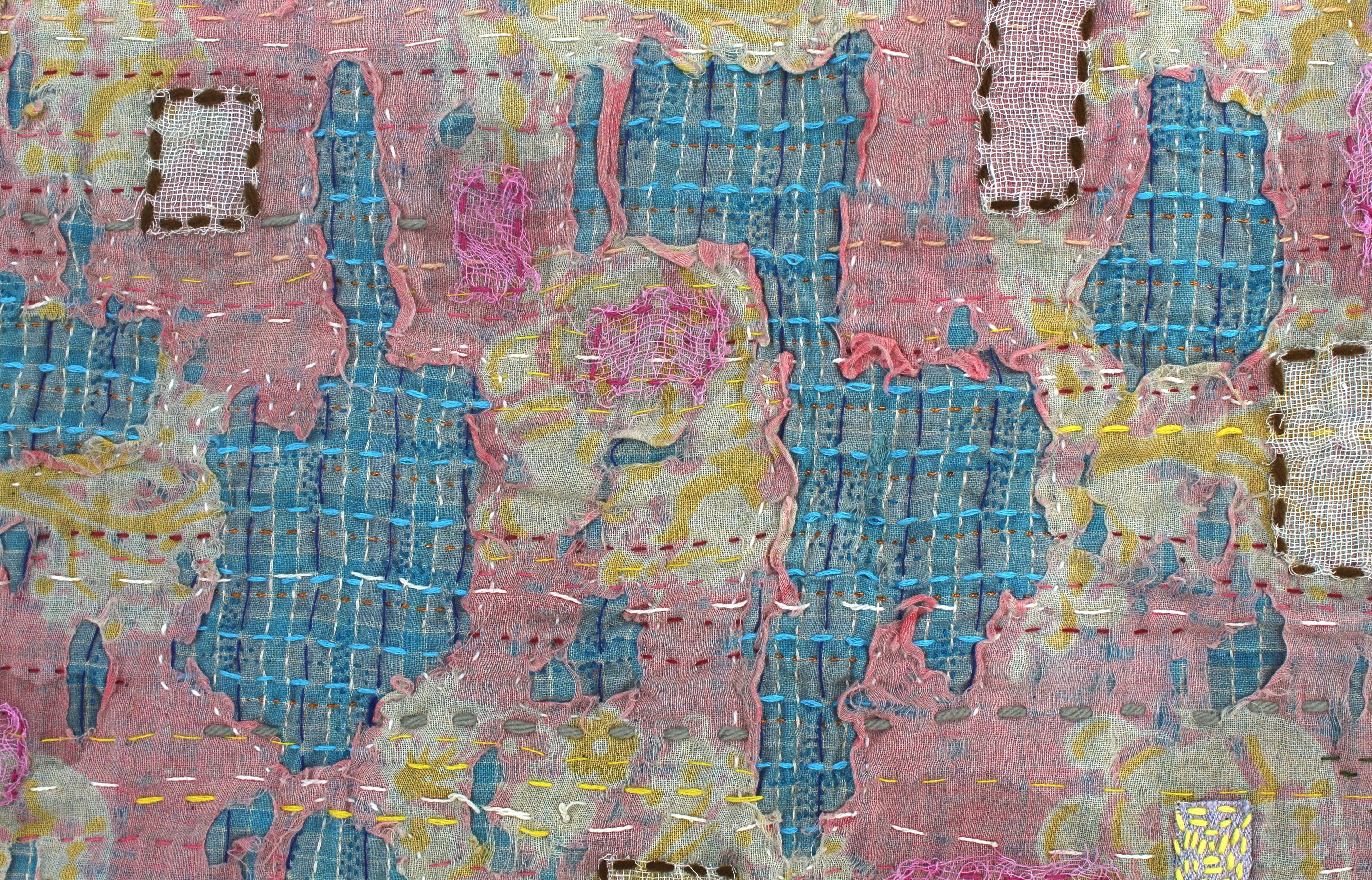
What histories of grief, labour, and care lie stitched into a piece of cloth—and how might acts of mending become a collective language of ecological and emotional repair?
Anshu Kumari (b. 1999) is an artist whose practice revolves around the material and metaphorical capacities of cloth. Engaging with discarded kathris (pieces of leftover fabric), she turns to hand-stitching, layering,…
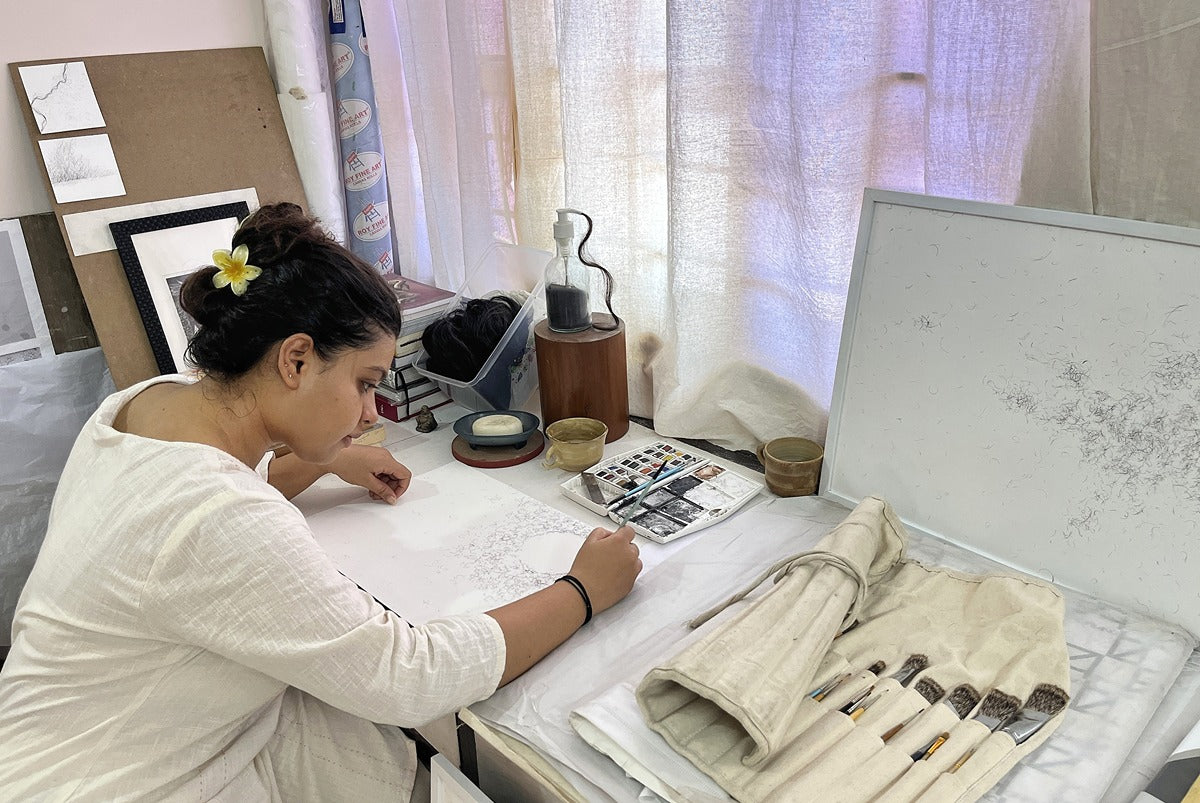
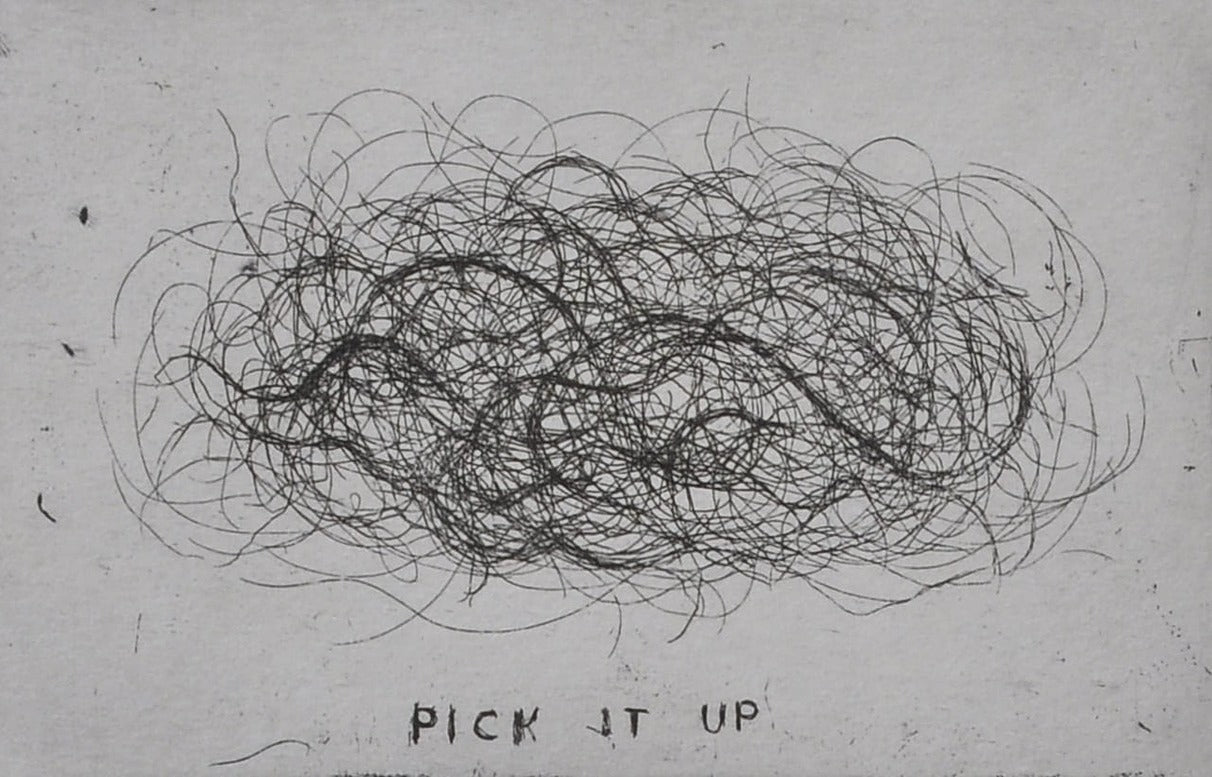
How does hair—something so fundamental to the human experience—evoke in equal parts memory, nostalgia, and disgust?
Ishita Patel (b. 1998) is an artist whose practice traces an evolution from the literal to the abstract, guided by her fascination with the expressive potential of line. Her works engage with the subject of hair, its repulsiveness and allure,...

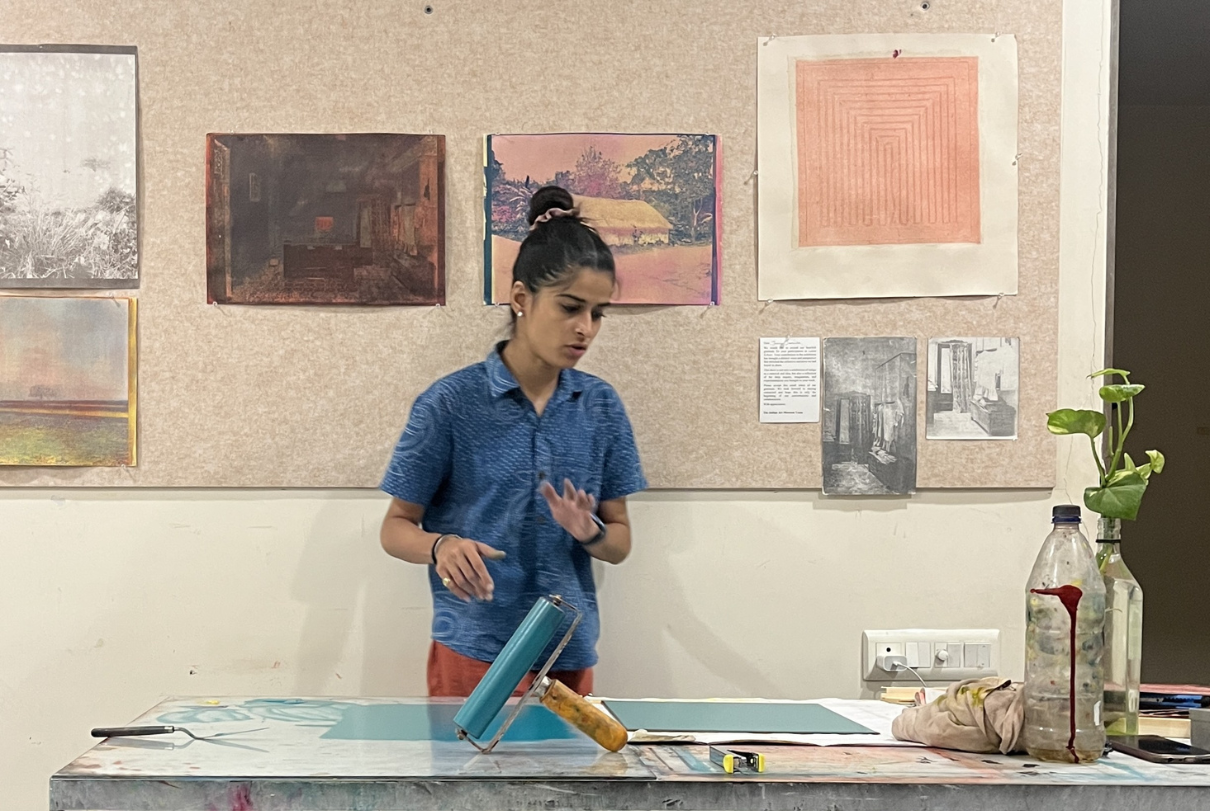
What does it mean to hold a thought long enough for it to leave a trace—and how might the quiet act of unravelling thread become a way of mapping memory, time, and the shifting architectures of home?
Grounded in printmaking, Jaimini Jariwala’s (b. 1991) practice unfolds through an intimate engagement with cloth, thread, and process. Her works are shaped by rhythm and repetition…
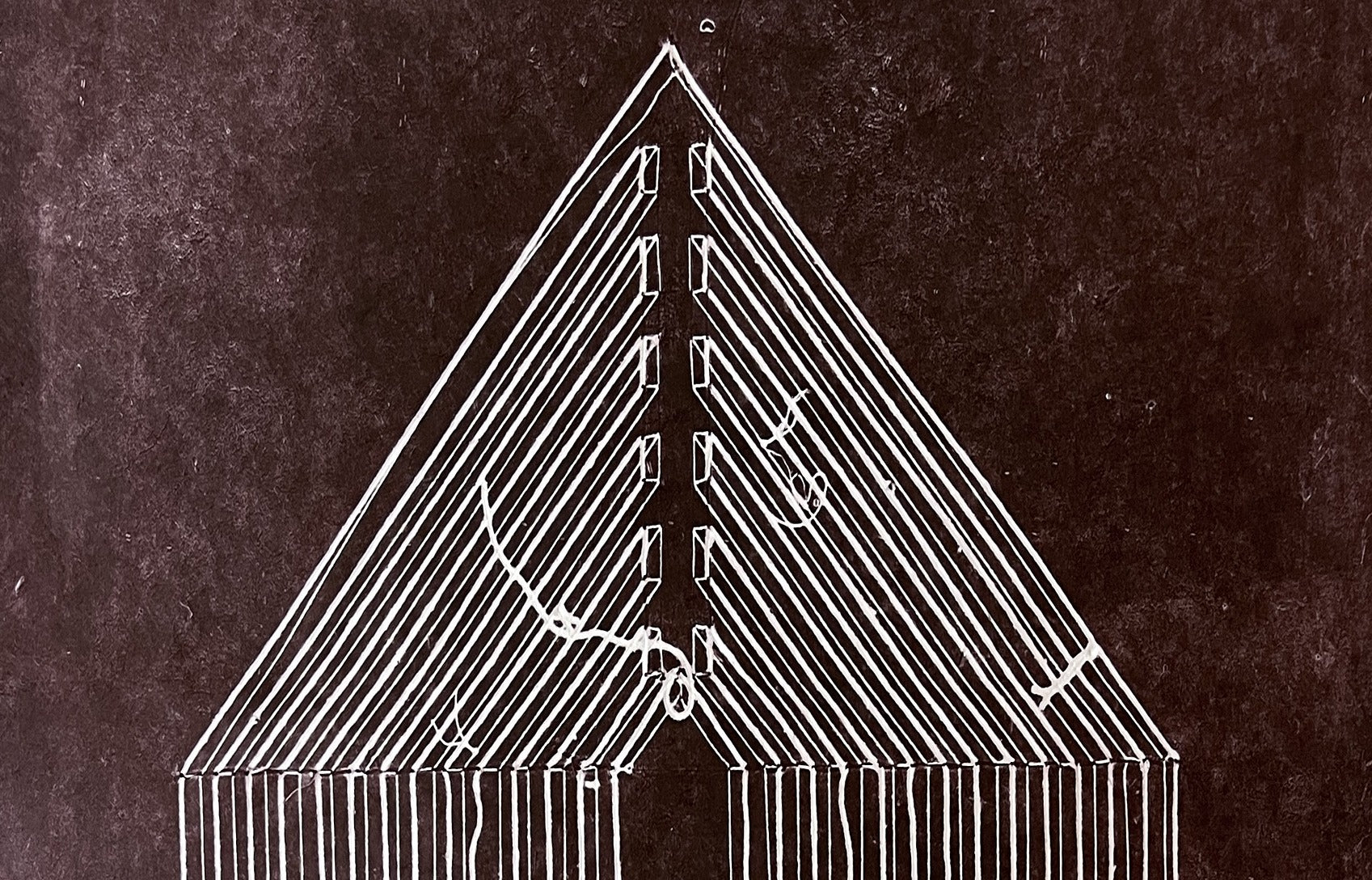
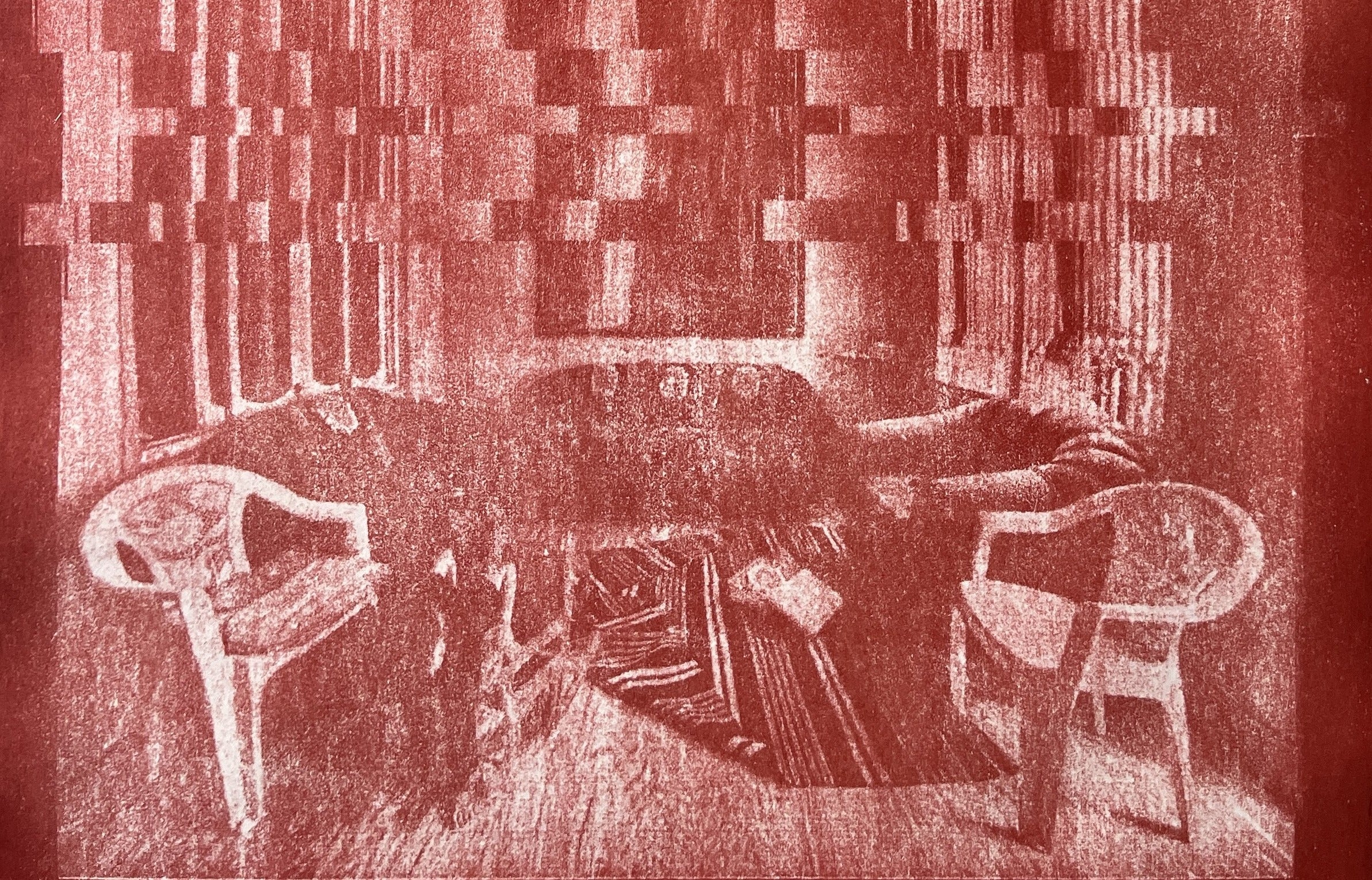
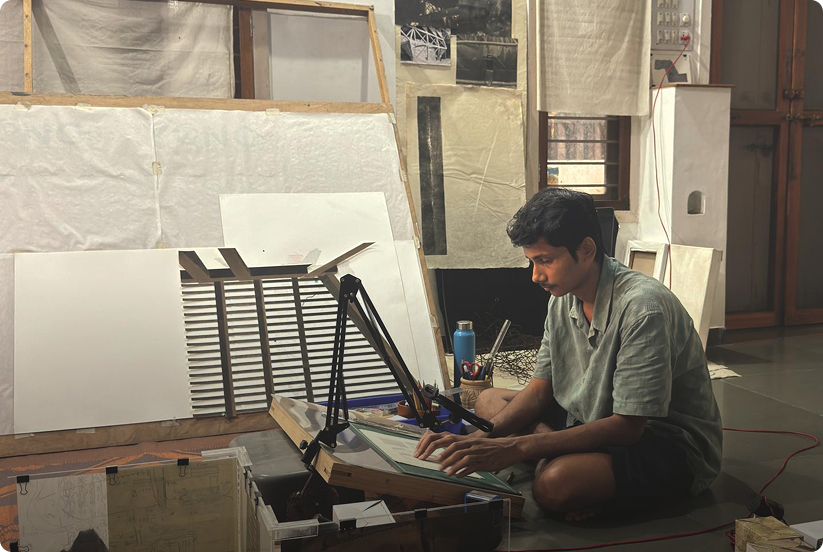
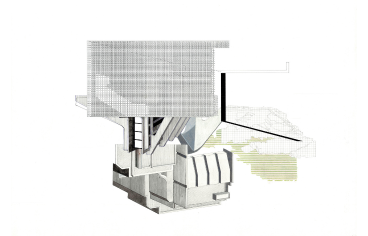
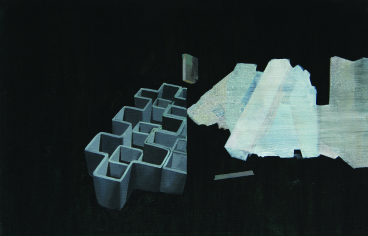
What if the walls, blueprints, and brutalist facades we inhabit are not silent structures, but contested archives of displacement, resilience, and political desire?
Shashikanta Mohanty’s (b. 1994) practice engages deeply with architectural forms and their sociopolitical resonances. His works examine how structures function as carriers of memory, resilience, and conflict,...
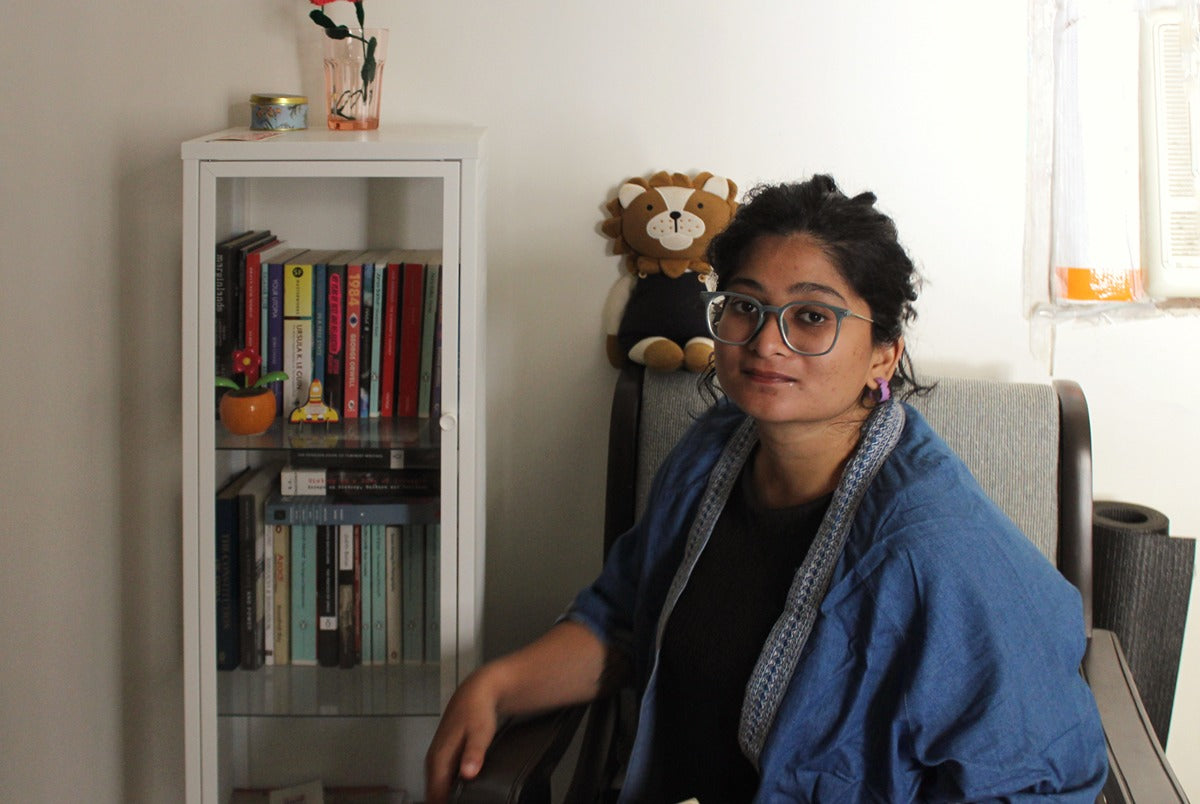
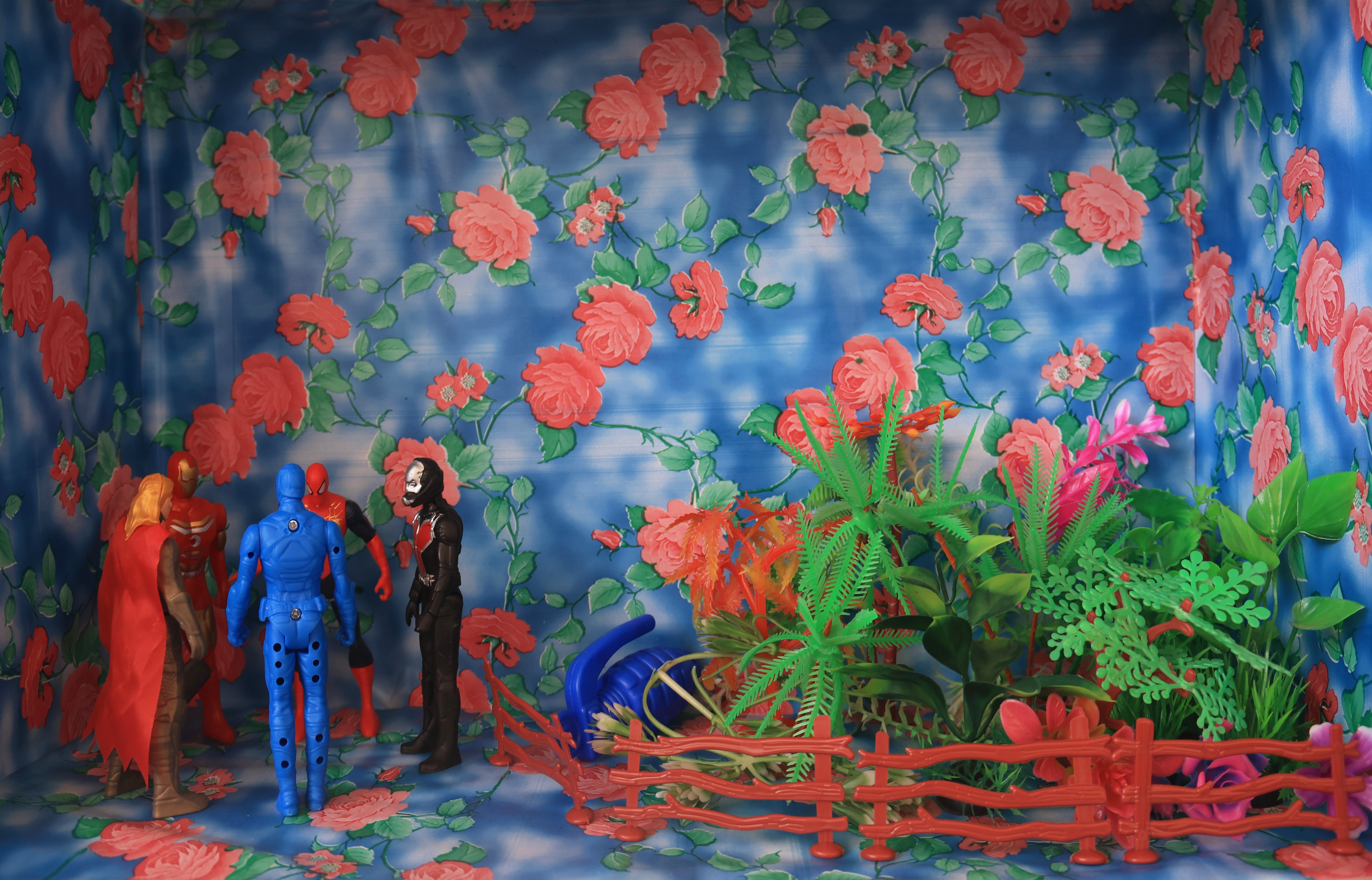
Can the discarded object, once freed from the logic of utility and waste, become the protagonist of a new speculative ecology—where play unsettles value and imagination rewrites capitalism’s afterlife?
Shruti Parekh’s (b. 2000) photographic and three-dimensional practice re-examines the circulation of mass-produced objects within late capitalist economies…
SPOTLIGHT
Previous
Next


